


DESIGNING FEATURE ARTICLES (Post-Production)
- Nov 22, 2022
- 3 min read
Updated: Feb 28, 2024

Designing a compelling magazine on the issue of child labor involved a thoughtful orchestration of various elements, and my journey in designing it with Photoshop has been an exploration of both creativity and functionality. To provide a visual impact and communicate the essence of our magazine, "Harmony," I strategically harnessed the power of Photoshop tools.
For instance, in the Harmony title of the masthead, I used the Zico Display font to convey strength and prominence. Photoshop's text tools allowed me to manipulate the font size, color, and positioning, ensuring that the title commands attention. The Barlow font, chosen for supporting covellines, was also precisely tailored using Photoshop's text tools for a clean and modern appearance.
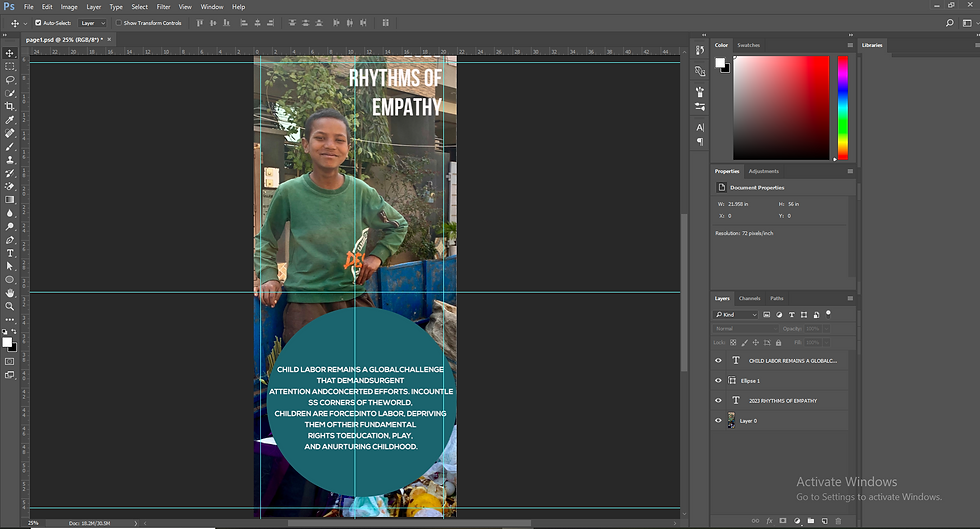
Additionally, Photoshop's layering capabilities were instrumental in arranging visual elements such as images and graphics. I employed the pen tool to create precise selections, allowing for seamless integration of impactful images that resonate with the theme of child labor. The software's ability to manipulate layers ensured a harmonious composition, with each element complementing the others.
As part of the design process, I utilized Photoshop's adjustment layers to enhance the color palette, ensuring that the overall visual tone aligns with the seriousness of the subject matter. Features like gradients, shadows, and highlights were carefully applied to add depth and dimension to the design, creating a cover that stands out and communicates the urgency of the child labor issue.
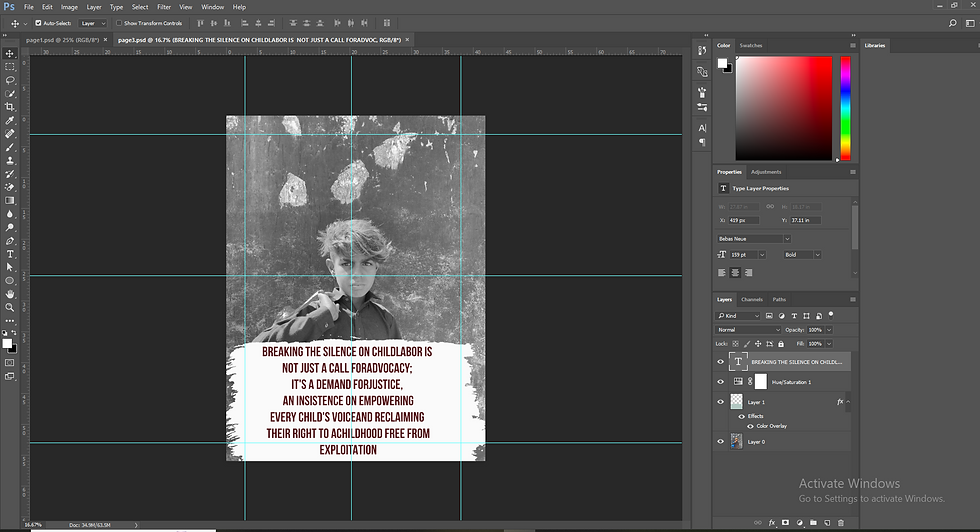
Beyond the cover, Photoshop played a pivotal role in designing feature articles. I employed techniques like text wrapping, where text flows around images, creating an engaging layout. This not only enhances readability but also integrates visuals seamlessly into the narrative. The use of layer styles, such as drop shadows and strokes, contributed to the overall aesthetic appeal, guiding readers through the content with a visually pleasing flow. Also, in designing the feature articles, Photoshop's selection tools, brushes, and filters came into play to fine-tune images and graphics. Techniques like color correction were applied to maintain a consistent visual theme throughout the magazine, ensuring a cohesive and professional look.
The application of Photoshop's retouching tools, such as the Clone Stamp and Healing Brush, played a crucial role in refining and cleaning up images. Removing distracting elements, blemishes, or imperfections from photographs contributed to a polished and professional look, elevating the overall quality of the visual content.
Additionally, I employed Photoshop's selection tools, such as the Magic Wand and Lasso tool, to precisely isolate subjects within images. This level of precision facilitated seamless integration of visuals into the magazine layout, enhancing the overall cohesiveness of the design.

The use of filters and effects in Photoshop added a layer of creativity to the images, contributing to the overall aesthetic appeal of the magazine. Techniques like applying subtle vignettes, softening edges, or introducing subtle gradients helped guide the viewer's focus and create a visually engaging narrative.
Furthermore, the manipulation of layers allowed for a dynamic interplay between text and images. By strategically placing images in relation to the text, I aimed to enhance the storytelling aspect of the feature articles. Layer styles, such as drop shadows and strokes, were applied judiciously to create depth and visual interest.
In summary, the image editing process involved a multifaceted approach, utilizing a range of Photoshop tools to refine, enhance, and stylize visuals. The objective was not just to present information but to evoke emotions, foster engagement, and convey the urgency of addressing child labor. Through these Photoshop techniques, the magazine's visual elements were transformed into impactful storytelling tools that were resonating well with the audience.





Comments